

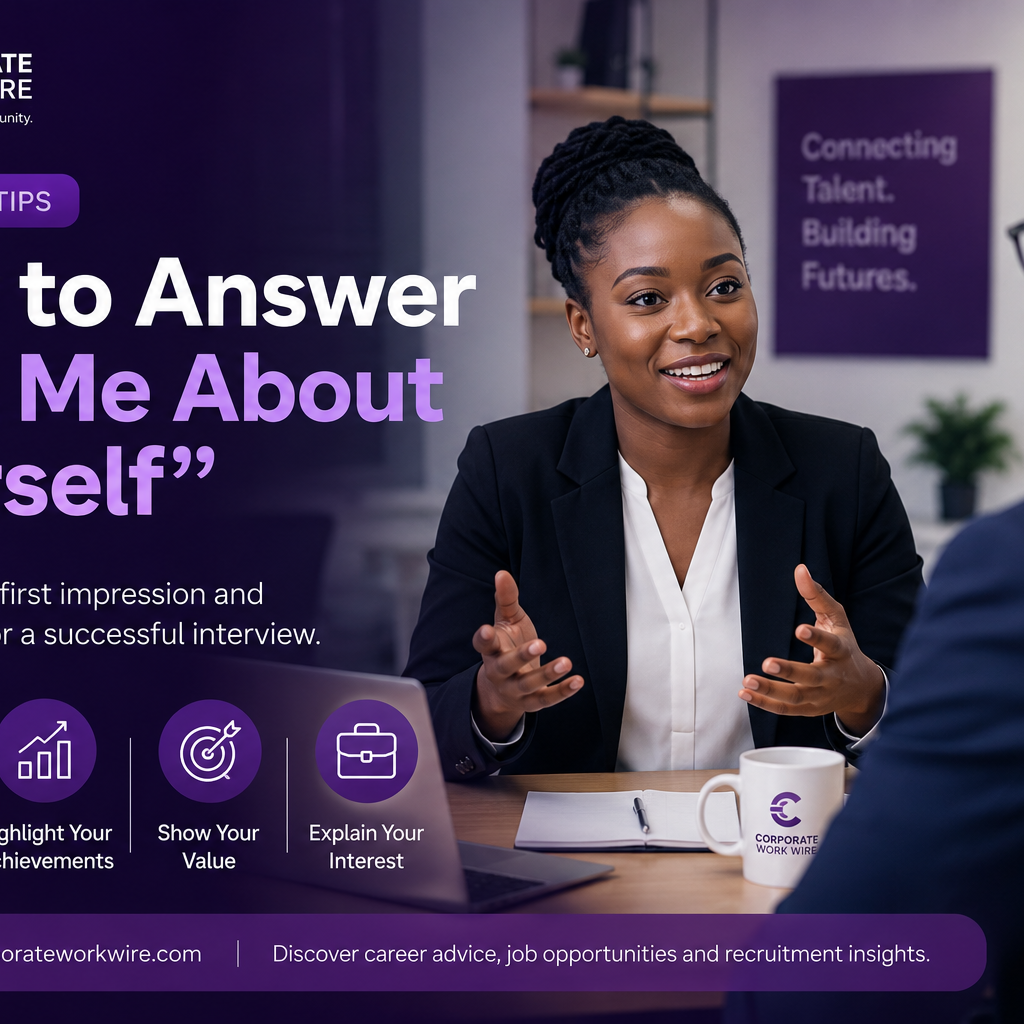
The Interview Question That Can Make or Break Your First Impression
Walk into almost any job interview, and there’s one question you’re almost guaranteed to hear within the first few minutes:
“Tell me about yourself.”
It sounds simple enough. After all, who knows you better than you? Yet, for many job seekers, this is one of the most difficult interview questions to answer. Some people begin talking about where they grew up, others repeat everything written on their CV, while some become so nervous that they struggle to find the right words.
What many candidates don’t realize is that this question isn’t just casual conversation. It’s your opportunity to set the tone for the rest of the interview. Before you’re asked about your technical skills, previous employers, or greatest achievements, the interviewer wants to understand who you are professionally and whether you’re someone worth getting to know.
The way you answer this single question often shapes the interviewer’s first impression, and as the saying goes, first impressions matter.
It’s Not About Your Life Story
One of the biggest misconceptions about this question is believing that the interviewer wants to know everything about your personal life. They don’t.
They’re not asking where you were born, how many siblings you have, what your favorite football team is, or what you enjoy doing every weekend. While those details might come up naturally later in a conversation, they don’t help an employer decide whether you’re the right person for the job.
Instead, recruiters are inviting you to introduce yourself as a professional. Think of it as giving someone the highlights of your career rather than the highlights of your life.
If your answer begins with, “Well, I was born in…”, you’ve probably taken the conversation in the wrong direction.
What the Interviewer Is Really Looking For
Although the question sounds open-ended, interviewers have a clear purpose behind asking it.
They’re assessing how confidently you communicate, whether you can organize your thoughts, and how well you understand your own career journey. They’re also trying to determine whether your experience aligns with the position they’ve advertised.
In many ways, this question acts as a preview of everything else they’ll ask. A clear, confident introduction immediately tells the interviewer that you’re prepared, professional, and comfortable discussing your experience.
On the other hand, a long, confusing answer filled with unnecessary details can make even a highly qualified candidate appear unprepared.
Think of It as Your Professional Story
Rather than listing every job you’ve ever had, tell your story.
Every career has a beginning, a journey, and a destination. Your answer should briefly explain where you’ve been, what you’ve learned, and why you’re excited about where you’re going next.
For example, if you’ve worked in customer service for several years, explain how those experiences helped you develop communication, problem-solving, and relationship-building skills. If you’ve recently moved into management, talk about how your responsibilities evolved and what leadership taught you.
The goal isn’t to recite your CV word for word. The interviewer already has your CV in front of them.
Instead, bring it to life.
Help them understand the person behind the document.
Every Job Requires a Different Story
One mistake many job seekers make is preparing one answer and using it for every interview.
Unfortunately, employers notice.
Imagine applying for a sales position. The interviewer wants to hear about your ability to build relationships, close deals, and communicate effectively. Those are the experiences you should emphasize.
If you’re interviewing for an IT role, however, they’ll be more interested in your technical expertise, the systems you’ve worked with, and how you’ve solved complex problems.
The same applies to finance, human resources, engineering, healthcare, education, and virtually every other profession.
A great answer isn’t simply about your experience it’s about making your experience relevant to the employer sitting across from you.
Show What You Achieved, Not Just What You Did
There’s an important difference between telling someone your responsibilities and showing them your impact.
Anyone can say they “managed customers” or “worked in administration.” Those statements don’t tell an employer how well you performed.
Instead, talk about what changed because you were there.
Perhaps you improved customer satisfaction, reduced processing times, exceeded sales targets, introduced a new system, or helped train new employees. These achievements paint a much clearer picture of the value you bring.
Whenever possible, include numbers. Employers remember measurable results because they provide evidence rather than opinions.
Keep It Short and Focused
Some candidates assume that speaking for longer makes them appear more experienced.
In reality, the opposite is often true.
A strong answer usually takes no more than one to two minutes. That’s enough time to introduce yourself, highlight your experience, and explain why you’re interested in the role.
If the interviewer wants more information and they usually will they’ll ask follow-up questions.
Think of your answer as the trailer to a movie, not the entire film.
Confidence Matters More Than Perfection
Many people spend hours trying to memorize the perfect answer, worrying that they’ll forget a sentence or say the wrong word.
Ironically, memorizing every line often makes candidates sound robotic.
Interviewers aren’t looking for a rehearsed speech. They’re looking for someone who can have a genuine professional conversation.
Practice enough that you know your key points, but allow yourself to speak naturally. It’s perfectly acceptable if your answer changes slightly each time you give it. In fact, that’s usually a sign that you’re speaking authentically rather than reciting a script.
Remember, confidence doesn’t come from memorization it comes from preparation.
Fresh Graduates Have a Story Too
One concern many graduates have is believing they don’t have enough experience to answer this question well.
That’s simply not true.
Your education, internships, volunteer work, leadership positions, academic projects, certifications, and transferable skills all form part of your professional story.
Employers hiring entry-level candidates don’t expect decades of experience. What they want to see is enthusiasm, willingness to learn, and evidence that you’ve already begun developing the skills needed for the role.
Confidence, curiosity, and a positive attitude often leave a stronger impression than an extensive work history.
The Mistakes That Cost Candidates Interviews
Recruiters repeatedly see the same avoidable mistakes.
Some candidates spend several minutes talking without allowing the interviewer to ask a question. Others criticize former employers, explain every job they’ve ever had, or provide personal details that have little relevance to the position.
Another common mistake is simply repeating what’s already written on the CV. Your interview should add context and personalitynot duplicate information the interviewer has already read.
Perhaps the biggest mistake, however, is failing to explain why you’re interested in the role. Employers want to hire people who are genuinely excited about the opportunity, not applicants who are sending the same generic responses to dozens of companies.
Your First Answer Sets the Tone
The first few minutes of an interview are often the most important. They’re when confidence is established, rapport begins to build, and first impressions are formed.
Answering “Tell me about yourself” isn’t about delivering the longest or most impressive speech. It’s about introducing yourself as a capable professional whose experience, skills, and ambitions align with the opportunity in front of you.
When you focus on your career journey instead of your personal history, speak naturally instead of memorizing every sentence, and connect your experience to the employer’s needs, you immediately position yourself as a stronger candidate.
The next time you’re asked, “Tell me about yourself,” don’t think of it as a difficult interview question. Think of it as your opportunity to tell the story that no CV ever fully can and to make the kind of first impression that opens the door to the rest of the conversation.